 Cape
Cape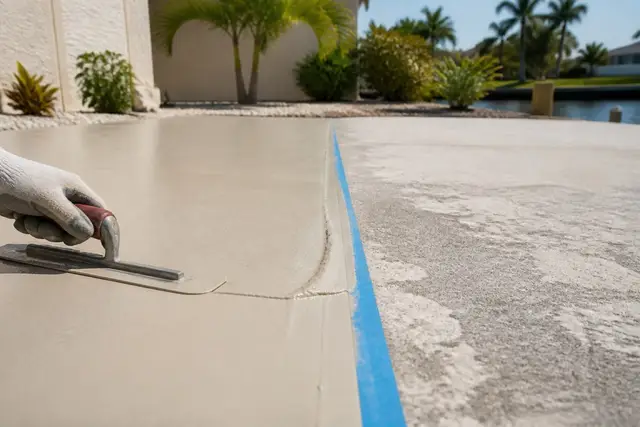
Cape Driveway Pros pairs Cape Coral homeowners with a local concrete contractor who quotes and handles concrete driveway resurfacing across Cape Coral and its Lee County neighbors.
Resurfacing exists for one specific patient: the Cape Coral driveway that is structurally fine but cosmetically done. Decades of tropical sun chalk the surface, pressure washers slowly erode the cream, spalls pockmark the sprinkler zones — yet the slab sits flat and solid on its base. A polymer-modified overlay, troweled or squeegeed down in a lift an eighth- to quarter-inch thick, buys that slab a brand-new wearing surface without a single truckload of demolition.
The candidate exam is strict, and honest contractors flunk slabs freely. Overlays follow the shape of whatever they cover, so settled panels stay settled and working structural cracks telegraph through the new surface within a season or two. Hollow-sounding delaminated spots must be cut out and patched first, and heavy surface contamination — years of vehicle drips, old sealers, paint — has to come off completely for the polymer to bond.
For slabs that pass, the economics are hard to argue with: resurfacing typically prices well under half of tear-out and repour, finishes in days, and can upgrade looks along the way — knockdown textures, micro-toppings tinted to warm shell tones, even stamped overlays. On a street where every third house is mid-renovation, it's the fastest route from worst driveway on the block to cleanest.
Bond is everything: prep in a humid climate
An overlay lives or dies at a boundary you'll never see again — the bond line. Preparation means mechanically opening the old surface by grinding or shot-blasting until it has the texture of fine sandpaper, then getting it clean and properly damp before material goes down. Surface-prep standards are a recurring theme in the American Concrete Institute's repair literature, and cutting that corner is the number-one reason overlays fail anywhere.
Southwest Florida adds a moisture wrinkle: in the wet season the water table rises into the Cape's sandy fill, and vapor drives upward through old slabs. Overlaying a slab that's actively transmitting moisture risks blistering, so experienced crews check with a simple taped-plastic test and favor the drier months for this work. It's a small scheduling discipline that decides whether the overlay lasts fifteen years or three.
Choosing a texture that works on a working driveway
Resurfacing is also a chance to re-spec the surface for how the driveway actually gets used. Knockdown and splatter textures hide minor imperfections and stay cool-toned underfoot; broom-textured overlays restore the classic look with fresh traction; smoother micro-toppings photograph beautifully but show tire marks faster on a drive that hosts a daily commuter. Material guidance from the Portland Cement Association covers the family of cement-based toppings well.
Color choice carries the same Florida logic as every finish here: light shell, sand, and pale gray tones reflect heat and hide the white rock dust that drifts off Cape landscaping, while dark charcoals run hot and show every dried raindrop's mineral ring. With the rainy season dropping storms most summer afternoons — see the seasonal pattern in the regional climate records — surfaces that rinse clean and dry light-colored simply look better more of the year.
Worth a deeper look
Before you pour
How do I know if my driveway can be resurfaced?
Three checks: the slab sits flat with no settled or rocking panels, cracks are hairline and stable rather than wide and working, and a tap survey finds no large hollow areas. Pass those and you're a candidate. The estimate visit runs exactly this exam and tells you which side you're on.
How long does an overlay last in Florida sun?
A well-adhered polymer overlay on a sound slab commonly delivers ten to fifteen-plus years here, with resealing on the usual two-to-three-year rhythm. The sun tests color more than structure — another argument for the light sand tones that dominate Cape color charts.
Can resurfacing fix the sunken spot by my garage?
No — an overlay is a new skin, not a new skeleton. Low spots need the slab lifted or the section rebuilt first, and then the overlay unifies the surface. Bundling those steps in one project is routine, and the quote separates the structural line from the cosmetic one.
When do cars get back onto an overlay?
Foot traffic typically within a day, vehicles in two to three depending on the product and the weather. Overlays are thin, so they cure faster than full slabs — but they also can't shrug off early abuse, so the barricade tape earns respect for that first stretch.
Is resurfacing just painting the concrete?
No. Driveway paint is a film that peels under tires within a couple of Florida summers. A cement-based overlay is anchored structure — sand, cement, and polymers troweled into the prepared surface — and it wears like concrete because it is concrete. The difference shows up in year two and forever after.