 Cape
Cape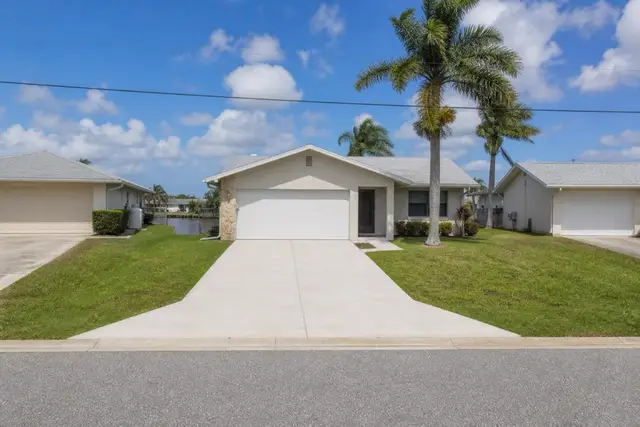
Cape Driveway Pros pairs Port Charlotte homeowners with a local concrete contractor who covers Port Charlotte for new driveways, tear-out replacements, repairs, and decorative concrete.
Port Charlotte is Cape Coral's philosophical sibling across the harbor: an unincorporated planned community of 60,625 (2020 Census) that the same era of Florida land companies platted into canal grids and quarter-acre lots in the 1950s and 60s. The parallels run right down to the ground — dredged waterways, fill-raised homesites, concrete seawalls — and so do the driveway problems.
The housing stock centers on 1970s and 80s single-story homes whose original slabs are deep into their retirement years, joined since Ian by a wave of new construction on the in-fill lots the original platting left empty. Replacement tear-outs and new-build pours therefore run side by side on the same streets, often within the same block — a rhythm familiar to anyone who has watched the Cape's own build-out.
Cape Driveway Pros serves Port Charlotte across the harbor bridge — requests route to the contractor with the same itemized quoting, and the crossing is a daily commute rather than an expedition. County permitting differs from the Cape's city system, the concrete does not: compacted fill, proper thickness, drainage-first aprons, and joints on schedule.
The other canal city's replacement wave
Port Charlotte's original driveways were poured for a different automotive era — thinner slabs, lighter cars, minimal base prep on fresh fill that hadn't finished settling. Fifty years on, the survivors are cracked into drifting panels along utility trenches and canal-side edges, and the replacement work follows the standard fill-lot doctrine: rebuild and compact the base, pour to modern spec, and saw joints on schedule per the flatwork fundamentals the Portland Cement Association documents.
Being unincorporated, Port Charlotte's permitting runs through Charlotte County's building department rather than any city hall, with right-of-way connections and drainage handled county-side. The drainage authority context here is the Southwest Florida Water Management District — different letterhead than the Cape's, identical physics.
In-fill construction and the second build-out
Like Cape Coral, Port Charlotte was platted decades ahead of its population, and the empty lots between older homes are filling now — new construction that brings new driveways, aprons, and culvert connections onto streets where the drainage grew up around gaps. Pouring a new drive between two 1975 neighbors means matching established swale grades precisely, so the newcomer's apron doesn't back water onto slabs that drained fine for half a century.
Storm exposure frames the calendar the same way it does harbor-wide: Ian's 2022 track — documented in the National Hurricane Center's report — ran the rebuild queue up on this side too, and the NWS Tampa Bay wet-season pattern sets pour schedules from June through September. Dry-season slots book first here for the same reason they do everywhere on this coast.
Worth a deeper look
Before you pour
Is Port Charlotte really in your service area?
Yes — it's a bridge crossing, not a road trip, and the contractor works both sides of the harbor routinely. Quotes, scheduling, and follow-through run identically to Lee County jobs; only the permit desk changes.
My 1978 driveway is crumbling at the edges — typical?
Extremely. Edge spalling on that vintage usually means thin original pours with no thickened edge, plus decades of mower and tire abuse. If the field of the slab is sound, edge rebuilds can buy years; if cracking runs throughout, it's replacement time. The probe visit gives you the honest verdict.
Who permits driveway work in Port Charlotte?
Charlotte County's building department — Port Charlotte has no city government. Right-of-way connections, culverts, and drainage all run county-side, and the contractor manages the filings as part of the project like anywhere else in the region.
Can a new in-fill driveway match the neighborhood's older look?
Close enough that it stops mattering within a couple of years of sun. Matching broom direction and apron geometry does most of the work; tone converges as new gray weathers. What shouldn't match is the old base prep — the new slab gets the modern spec underneath.
Do canal-lot rules differ from Cape Coral's here?
Details differ, doctrine doesn't: keep slab loads and drainage away from seawall working zones, respect the platted flow paths, and coordinate concrete with any wall repairs. The contractor prices Port Charlotte canal lots with the same wall-aware checklist used across the harbor.