 Cape
Cape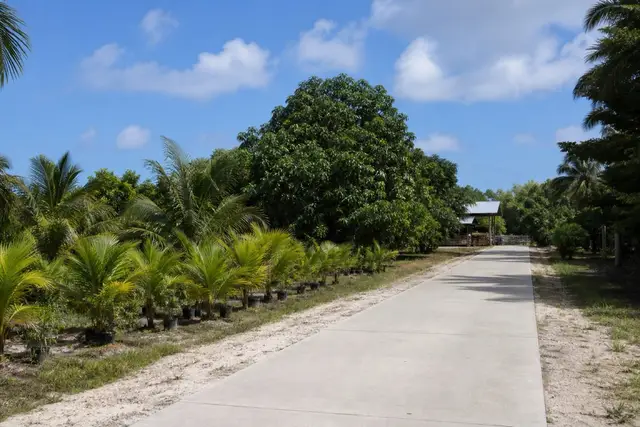
Cape Driveway Pros pairs Bokeelia homeowners with a local concrete contractor who covers Bokeelia for new driveways, tear-out replacements, repairs, and decorative concrete.
Bokeelia is old agricultural Florida holding its ground at Pine Island's north end: 1,855 residents at the 2020 Census among mango groves, palm nurseries, tin-roofed sheds, and long sandy lanes that end at Charlotte Harbor. The island's famous mangoes grow here, the fishing pier draws its regulars, and the pace explains why people move here on purpose.
Concrete requests follow the acreage: long ribbon drives from Stringfellow Road back to homesteads, equipment and barn slabs for grove and nursery operations, boat pads for harbor access, and conversions of shell lanes that have been graded annually for fifty years. Full-width paving of a 300-foot lane is rare and rarely sensible — phased and ribbon approaches fit both the budgets and the look of the place.
The ground is the island's best: sand and shell over shallow caprock, drained and firm, with generations of grove traffic having compacted the working lanes already. Cape Driveway Pros sends Bokeelia work to a contractor comfortable with rural-scale projects — the kind where the quote conversation happens on a tailgate and covers the tractor's needs alongside the family cars.
Farm-duty flatwork
Grove and nursery concrete earns its spec from equipment: tractor and loader traffic wants six-inch reinforced slabs at work areas, aprons where machines turn, and washdown pads that drain to ground rather than ponding against sheds. Sizing slabs to actual axle loads instead of guesswork is basic slab-on-ground engineering — the reference material sits in the ACI's public topic library — and it's cheaper to pour right once than to patch a cracked underbuilt pad forever.
Working around living inventory is the local craft: pours routed clear of grove root zones and nursery irrigation, dust control during dry-season grinding, and schedules that respect harvest weeks. The UF/IFAS Lee County extension has advised island growers for decades and remains the neutral source on protecting trees while building beside them.
Long lanes, phased sensibly
The economics of a quarter-mile lane push toward staging: concrete the entrance and the house-end parking first, ribbon-pour the long middle when budget allows, and let compacted shell serve the balance meanwhile. Shell lanes that tractors have rolled for generations make legitimately excellent base — the deep-sand mechanics described in UF/IFAS's soils overview work in the owner's favor here more than anywhere in the service area.
Permitting runs through Lee County, with the roadside connection at Stringfellow getting the formal attention. Bokeelia's exposure to Charlotte Harbor weather earns one more design note: entrance aprons built high enough to stay serviceable when a harbor storm pushes water up the lanes — a lesson the north island applies from long memory.
Worth a deeper look
Before you pour
Can part of my lane stay shell if I concrete the rest?
Absolutely — that's the standard Bokeelia project shape. Concrete where surfaces matter most (the road connection, parking, equipment areas), maintained shell between, with grades planned so a future ribbon pour drops in without rework. The quote can price the phases separately.
Do you pour slabs for barns and equipment sheds?
Yes — thickness and reinforcement follow what parks on them, from mower sheds at four inches to loader-duty slabs at six with steel. Anchor bolts, aprons, and washdown drainage get planned in the same visit. It's the bread and butter of rural-scale concrete.
Will construction traffic hurt my grove trees?
Not if routes respect root zones — the drip line is the working boundary, and haul paths get set outside it. Where a pour must pass near mature trees, plates and matting spread loads. Protecting twenty-year mangoes is cheaper than replacing them; everyone involved knows it.
What's different about quoting rural Bokeelia work?
Scale and access: footage gets measured honestly, causeway haul is factored, and the estimate walks the whole route because a long lane can cross three kinds of ground. Expect a longer site visit and a more detailed itemization than a city driveway gets — that's the point of it.
Can a pad double as hurricane tie-down for equipment?
Yes — cast-in anchor points on an engineered pad are a modest add during the pour and give tractors, boats, and sheds something real to strap to. North-island owners increasingly ask for them by default; after 2022, nobody needs the argument made twice.