 Cape
Cape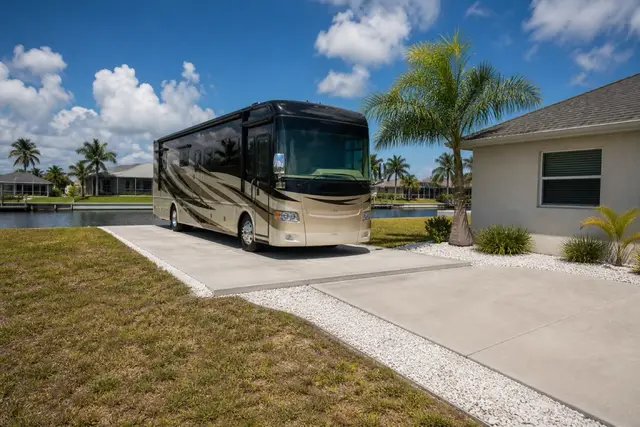
Cape Driveway Pros pairs Cape Coral homeowners with a local concrete contractor who quotes and handles parking pads & rv pads across Cape Coral and its Lee County neighbors.
Cape Coral is an RV and boat city by disposition — wide lots, no-snow winters, and a canal grid that puts a trailer in half the side yards. What those rigs need is honest concrete: a Class A motorhome can push 30,000 pounds onto six wheels, and a tandem boat trailer parks the better part of two tons on four small contact patches. Pads for that duty pour at five to six inches with steel over seriously compacted base — a different animal from the family driveway.
Layout earns as much thought as thickness. An RV pad wants a straight, wide approach with turning geometry a 35-foot rig can actually swing; clearance from the house for slide-outs and awnings; and, for owners who plan hookups, conduit and a sanitary connection sleeved under the slab before the pour rather than trenched through it after. Boat pads want tongue-jack landing zones and a rinse-friendly pitch that sheds washdown water away from the house.
The zoning layer is real but navigable: Cape Coral regulates where RVs and trailers may park on residential lots — generally side and rear yards with screening rules — and the pad should be poured where the vehicle may legally live. The contractor confirms placement against current rules during the estimate, which beats pouring a beautiful slab in an unpermittable spot.
Why RV pads fail when driveways don't
A car spreads its weight over four generous patches and leaves every morning; an RV concentrates far more load and then doesn't move for months. Sustained point loading over jack pads and axle groups finds every soft lens in a sandy subgrade, which is why pad prep here goes beyond driveway practice: deeper compaction passes, plate testing of suspect areas, and thickened sections under the jack line. Florida's deep sandy soil profile — described in UF/IFAS's soils overview — compacts superbly, but only when someone actually does it.
Steel matters more too. Wire mesh chairs up or rebar goes in on a grid, because a slab that will carry a parked rig through six months of summer rains needs its cracks held tight against water intrusion into the base. The reinforcement-and-jointing reasoning is standard slab-on-ground practice, collected in the American Concrete Institute's Topics in Concrete — bridge-deck logic, scaled to a side yard.
Planning the pad around storm season
An RV or boat pad in Lee County is also hurricane infrastructure: it's where the rig gets strapped down or the boat gets cradled when a system enters the Gulf. That argues for placement away from large trees, anchor points cast into the slab where owners want them, and elevation that keeps stored vehicles out of the sheet flow a tropical downpour sends across a yard. The NWS Tampa Bay office covers this coast's watches and warnings; the pad is what readiness looks like in concrete.
Seasonal owners get one more consideration: a pad that will sit empty from May to November should still drain clean and resist staining, because the first thing a returning snowbird inspects is the slab. Sealed surfaces and a fall rinse-down keep the winter arrival pleasant — small maintenance for a pad that works half the year.
Worth a deeper look
Before you pour
How thick should an RV pad be?
Five inches reinforced is the sensible minimum for anything Class A sized, six for heavier rigs or ones parked long-term, over base compacted specifically for the load. A boat-trailer pad can live at four to five depending on the boat. The quote states thickness and steel plainly so you can compare bids honestly.
Can I run power and sewer to the pad?
Yes — and the time to say so is before the pour, so conduit and a sanitary sleeve cross under the slab in the base stage. Electrical and plumbing connections themselves are work for the electrical and plumbing trades, permitted separately; the concrete package coordinates the sleeves so those trades never cut your new slab.
Where on my lot can an RV pad legally go?
Cape Coral's rules generally point RVs and trailers to side or rear yards, behind the front building line, sometimes with screening. Corner and waterfront lots each have quirks. Placement gets verified against current zoning at the estimate — the pad is poured where the vehicle is allowed to live.
Gravel pad now, concrete later — worth it?
Gravel under a stored RV on this sand tends to rut, wander, and grow weeds within a season or two, and jacks still need lumber pads. If the budget forces staging, compacted shell base now genuinely does become the sub-base for concrete later — just plan the grade for the final slab from day one.
Will a pad addition raise drainage problems with my neighbor?
Not if it's pitched like it should be — new impervious area must shed to your own swale path, not across the lot line. That's a grading-plan question the crew answers with a level before forming. Sheet flow disputes between neighbors are exactly what good pitch design prevents.