 Cape
Cape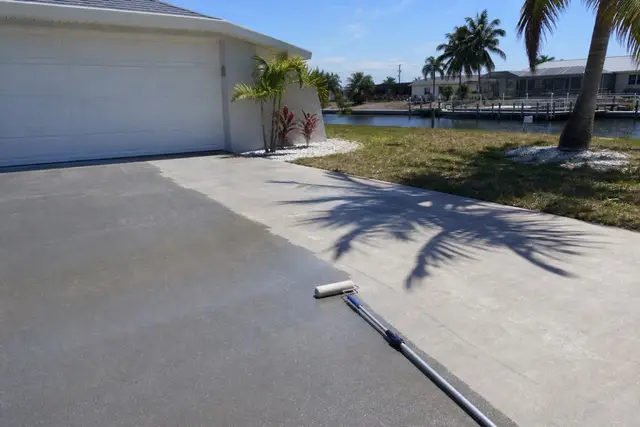
Cape Driveway Pros pairs Cape Coral homeowners with a local concrete contractor who quotes and handles concrete driveway sealing across Cape Coral and its Lee County neighbors.
Sealing is the cheapest insurance a Cape Coral slab can buy, and the local case for it is specific: brutal ultraviolet that chalks unprotected surfaces, salt drifting off 400 miles of canals, iron-heavy well water spraying from half the city's irrigation systems, and six months of storms driving water into every pore. A sealed surface sheds all four; an unsealed one absorbs them and shows it within a few years.
Two chemistries do the local work. Penetrating silane and siloxane sealers soak in invisibly and block water and chloride absorption without changing appearance or traction; that's the default pick for an everyday broom-textured drive. Acrylic film products add the wet-look depth that makes stamped and exposed-aggregate finishes glow, at the price of a re-coat cycle and a bit of care around slip resistance. Which one fits depends on the surface and how you use it.
Timing is half the craft in this climate. Sealers want dry concrete, moderate temperatures, and a rain-free window — a combination the wet season almost never offers and the dry season offers weekly. Crews here run sealing work from late fall through spring, and a driveway sealed in January is simply a better-executed job than the same driveway raced against a June sky.
What salt air actually does to concrete
Chloride exposure on the Cape is subtle but constant: spray and mist off the saltwater canals, brackish influence in some irrigation wells, and the general marine air of a peninsula city. Chlorides that soak into concrete attack embedded steel and slowly degrade the paste — the mechanism is a central subject of durability research across the American Concrete Institute's technical committees. A penetrating sealer's whole job is refusing that ride: water beads and evaporates instead of carrying salts in.
Canal-front driveways and the aprons where boat trailers drip after a day on the water get the heaviest exposure, and they're the slabs where sealing moves from nice-to-have to obviously worth it. Rinsing trailer drip zones with fresh water and keeping the sealer maintained is the same two-step logic marinas use on their own hardstands.
A maintenance calendar that fits the Cape
The rhythm that works here: pressure-wash and inspect each spring, re-apply penetrating sealer roughly every four to five years, re-coat decorative acrylics every two to three, and touch up high-wear tire paths as they dull. New concrete waits about 28 days before its first sealing so the slab finishes its early cure — a patience requirement the National Ready Mixed Concrete Association's producer members echo in their cure recommendations.
Stain prevention rounds out the program. The Cape's signature orange irrigation staining is far easier to keep off a sealed surface than to scrub out of a porous one, and the Lee County extension office publishes practical help on the iron-rich well water behind it. Oil drips, tannin stains from sea grape and palm litter, and rust from patio furniture all follow the same rule: on sealed concrete they're a wipe, on raw concrete they're a project.
Worth a deeper look
Before you pour
How often should a Florida driveway be sealed?
Penetrating sealers: every four to five years. Acrylic film sealers on decorative finishes: every two to three, since the film wears under tires and sun. If water stopped beading and darkens the slab on contact, the previous application has retired and it's time.
Will sealing make my driveway slippery?
Penetrating sealers change nothing about traction — they're invisible. Gloss acrylics can get slick when wet, which is why applicators here stir a fine traction grit into the product before rolling driveways and pool decks. Ask for it by default on any film-forming product.
Can I seal my driveway myself?
A careful owner can apply a penetrating sealer with a pump sprayer on a clean, dry slab. Where jobs go sideways is prep — sealing over dirt, old failing sealer, or damp concrete — and with solvent acrylics, where roller technique decides whether it dries even or blotchy. The pro difference is mostly the prep.
Does sealing stop the orange sprinkler stains?
It dramatically slows them and keeps the iron near the surface where cleaners lift it easily. It doesn't fix the source: iron-rich well water hitting concrete daily will eventually tint even sealed surfaces. Re-aiming heads and treating the water finishes the job the sealer starts.
When's the best time of year to seal in Cape Coral?
November through April, comfortably — dry air, mild temperatures, and long rain-free stretches. Summer sealing is possible between systems but gambles the cure window against the daily radar. If your driveway needs sealing in July, it will thank you for waiting until fall.